
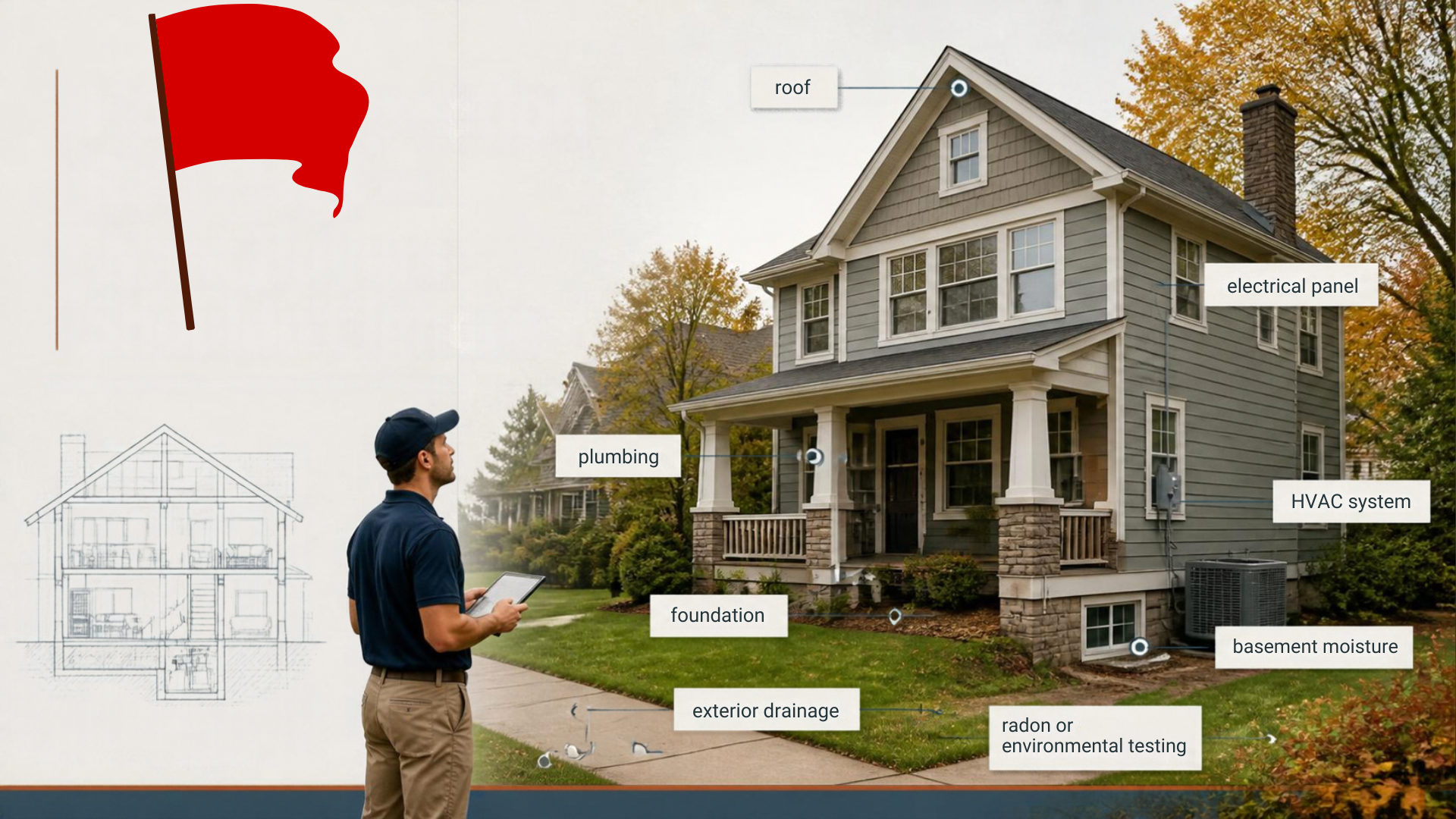
A home can look perfect during a showing while hiding costly problems behind the walls, under the roof, or around the foundation. Fresh paint and beautiful staging can create a great first impression, but a professional home inspection can reveal important details about the property's condition.
Not every inspection finding is a reason to walk away. Most homes have some maintenance needs. The key is understanding which issues may require further investigation before you move forward.
1. Water Damage and Moisture
Look for water stains, musty odors, peeling paint, damp basements, or signs of moisture around windows and sinks. A small stain may be from an old repair, but active moisture should be investigated to identify and correct the source.
2. Foundation Concerns
Small cracks can be common, but large or widening cracks, noticeably uneven floors, bowing walls, or doors and windows that no longer fit properly may deserve additional evaluation by a qualified professional.
3. Roof Problems
Missing shingles, damaged flashing, water stains, sagging areas, or an aging roof can lead to significant future expenses. Ask about the roof's approximate age, condition, and repair history.
4. Electrical Issues
Frequent breaker trips, damaged outlets, exposed wiring, flickering lights, or signs of overheating should not be ignored. When an inspector recommends further evaluation, a licensed electrician can help determine the extent of the issue.
5. Plumbing Problems
Leaks, low water pressure, slow drains, damaged pipes, or an aging water heater can signal repairs that may become expensive if left unaddressed.
6. Heating and Cooling Systems
Older HVAC equipment isn't automatically a problem, but buyers should understand its condition, maintenance history, and potential replacement timeline before purchasing.
7. Mold, Pests, and Other Warning Signs
Mold-like growth, persistent moisture, termite damage, or strong unexplained odors can warrant additional investigation. Identifying the underlying cause is more important than simply addressing what is visible.
Don't Skip the Follow-Up
If an inspector recommends additional evaluation, consider bringing in the appropriate specialist, such as a structural engineer, electrician, plumber, roofer, or pest professional. A little extra investigation can provide valuable information before closing.
The Bottom Line
A home inspection isn't about finding a perfect house. It's about understanding the home you're buying. Knowing which issues need attention can help you budget for repairs, negotiate where appropriate, and make a more informed decision.
Thinking about buying a home? Contact me to discuss what to look for during the home-buying process and how to approach inspection findings with confidence.